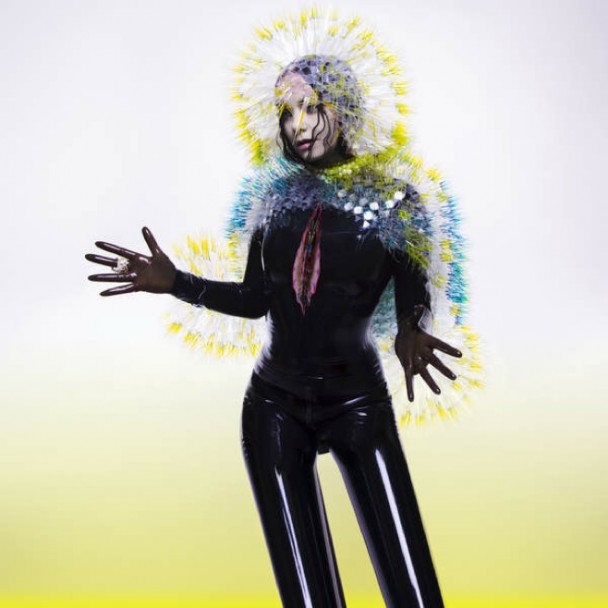
- ‘We’re absolute volcanoes.’ This is how the French author J.M.G. Le Clezio once described the human body and the seismic drama of its fiercest emotions. I’ve always thought that he may as well have been describing Björk.
From the ‘emotional landscape’ of Jòga (1997) to the scientific rapture of 2011 album Biophilia, the inimitable Icelandic artist has always stretched her work out across the frame of the world, blurring the boundary between the natural and the personal.
It’s fitting that she now returns to us from such cosmic heights, like a spacecraft disintegrating, ‘layer by layer,’ as it re-enters the earth. Or at least that’s the metaphor Björk uses on Black Lake, the devastating centrepiece of her eighth album, Vulnicura.
Over the space of Vulnicura’s nine long tracks, Björk combines the pedantic, sharp-eyed rationality of Biophilia with the raw-throated intimacy of her classic ‘90s work. The combination is staggering, a crisp, elegant document that is as neat as it is moving, as regal as it is tragic.
Björk has always produced lush, slow and somewhat ponderous albums. At nearly an hour in length, Vulnicura is no exception. Yet conceptually, it is her most focused and accessible record, a theatrical ‘breakup album’ to end all breakup albums.
This is not so much a straightforward emotional landscape as it is an entire ecology of pain, painstakingly pored over without blame or self-pity. On grand opener Stonemilker, she speaks of being ‘open chested,’ seizing on a metaphor at once biological and confessional. This pain is then dissected, meticulously scrutinised from all angles.
Musically, many critics are calling this album a conceptual companion to the coy, heady Vespertine (2001), which was inspired by the start of the relationship whose end inspired Vulnicura. There is value in this comparison, yet I feel that Björk’s 1997 opus Homogenic provides a more fruitful point of comparison.
Both records are defined by a simple combination of swooping cinematic strings, vocal pyrotechnics and prickly beats. The two opening tunes, Stonemilker and Lionsong, blend into one another with their unhurried tragic flourishes. The experience is irresistible, once you lock into the album’s languid pace.
Co-producers Arca and The Haxan Cloak take up the mantle of the late Mark Bell with aplomb. In their hands the beats on the comparatively rhythmic second side sound fresh out of IDM’s heyday, yet somehow wiser for the experience, warmer and less fussy.
Indeed, some of the more beat-heavy tracks (Notget, Mouth Mantra, Quicksand) come off as more timeless than dated, a little like Aphex Twin’s triumphant return last year.
That Björk can return to her classic sound in 2015 is a testament to the strength and originality of her artistic vision, and its extraordinary growth over the last two decades. Vulnicura is an absolute volcano, holding its own among the emotional landscape of Björk’s finest work.
— Henry Reese.
BjörkVulnicura

Zoë (sparrow)It Takes All Of Us

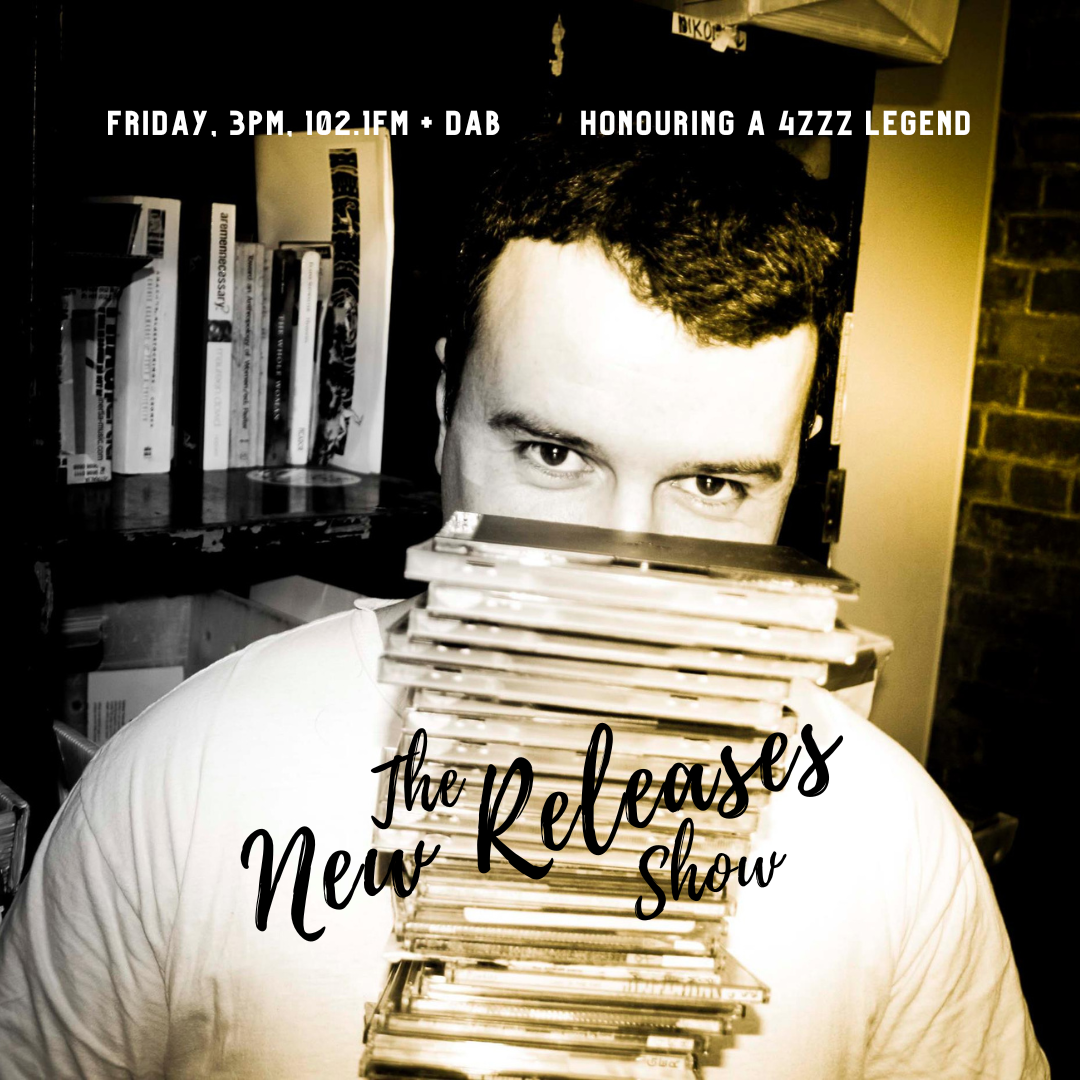
Chris CobcroftNew Releases Show
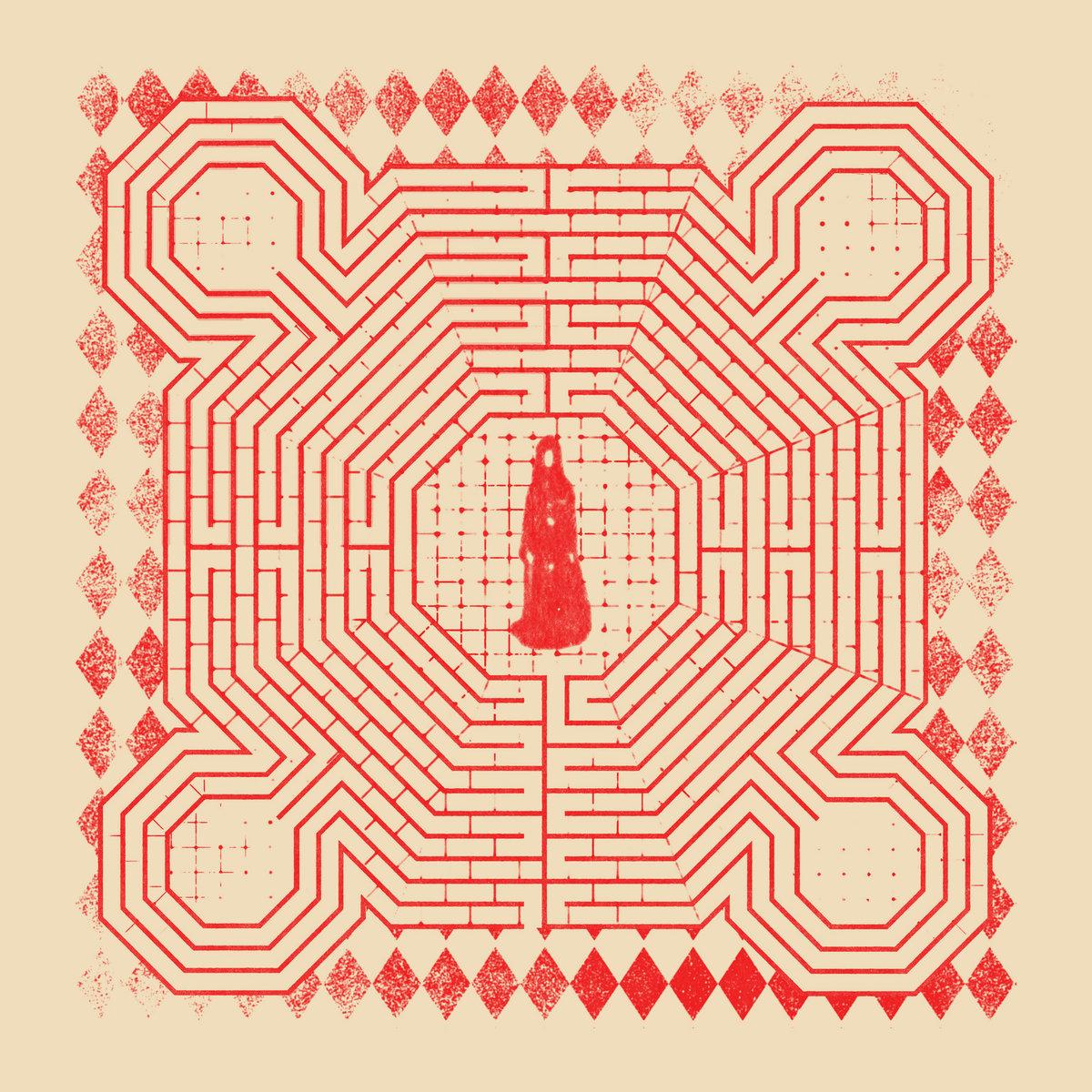
Slowdiveeverything is alive
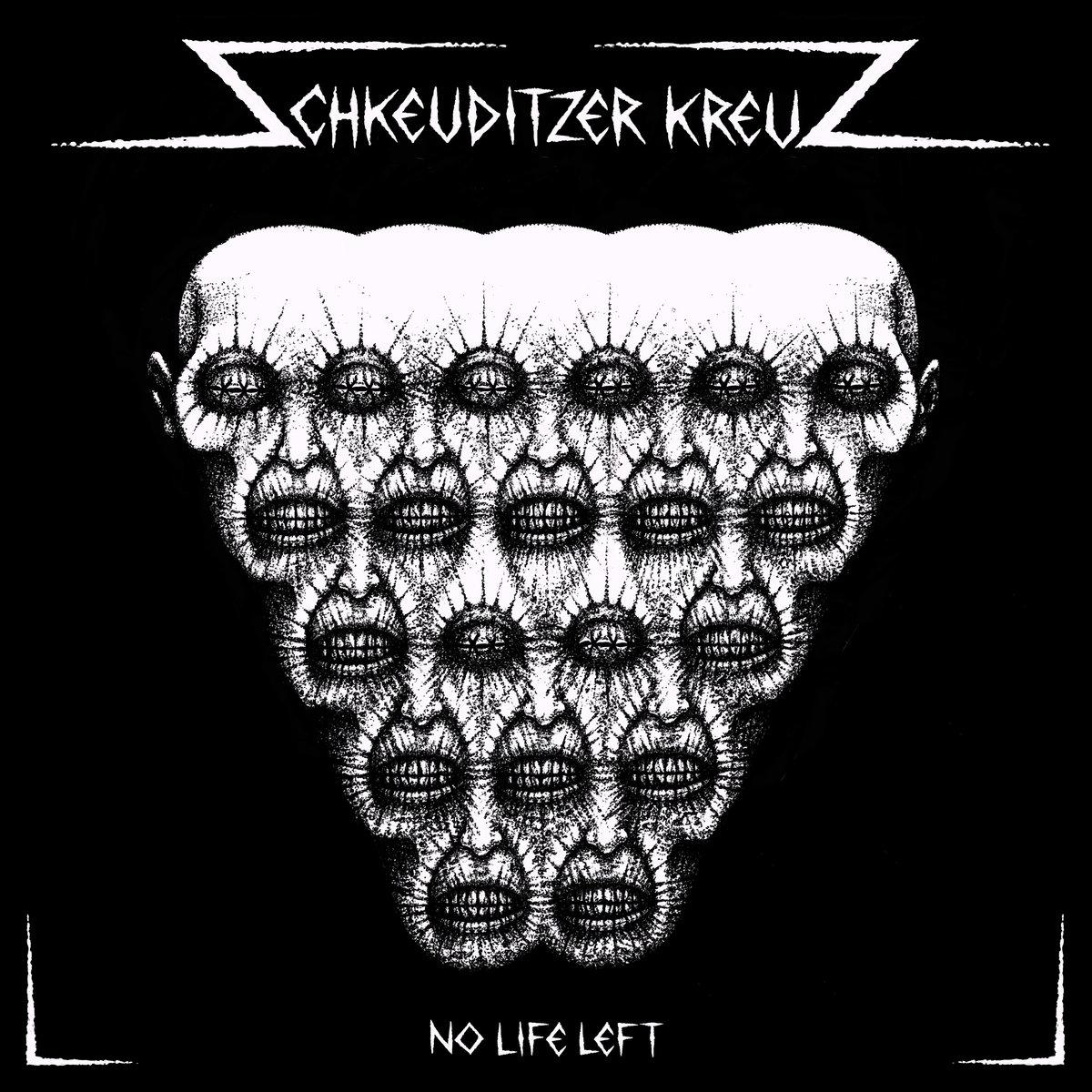
Schkeuditzer KreuzNo Life Left
Magic City CounterpointDialogue
Public Image LimitedEnd Of World
SejaHere Is One I Know You Know
DeafcultFuture of Illusion
CorinLux Aeterna
FingerlessLife, Death & Prizes